
For years, decentralised finance (DeFi) has challenged the idea that every financial transaction needs a bank, broker or intermediary.
But if there is no middleman, who exactly should be regulated?
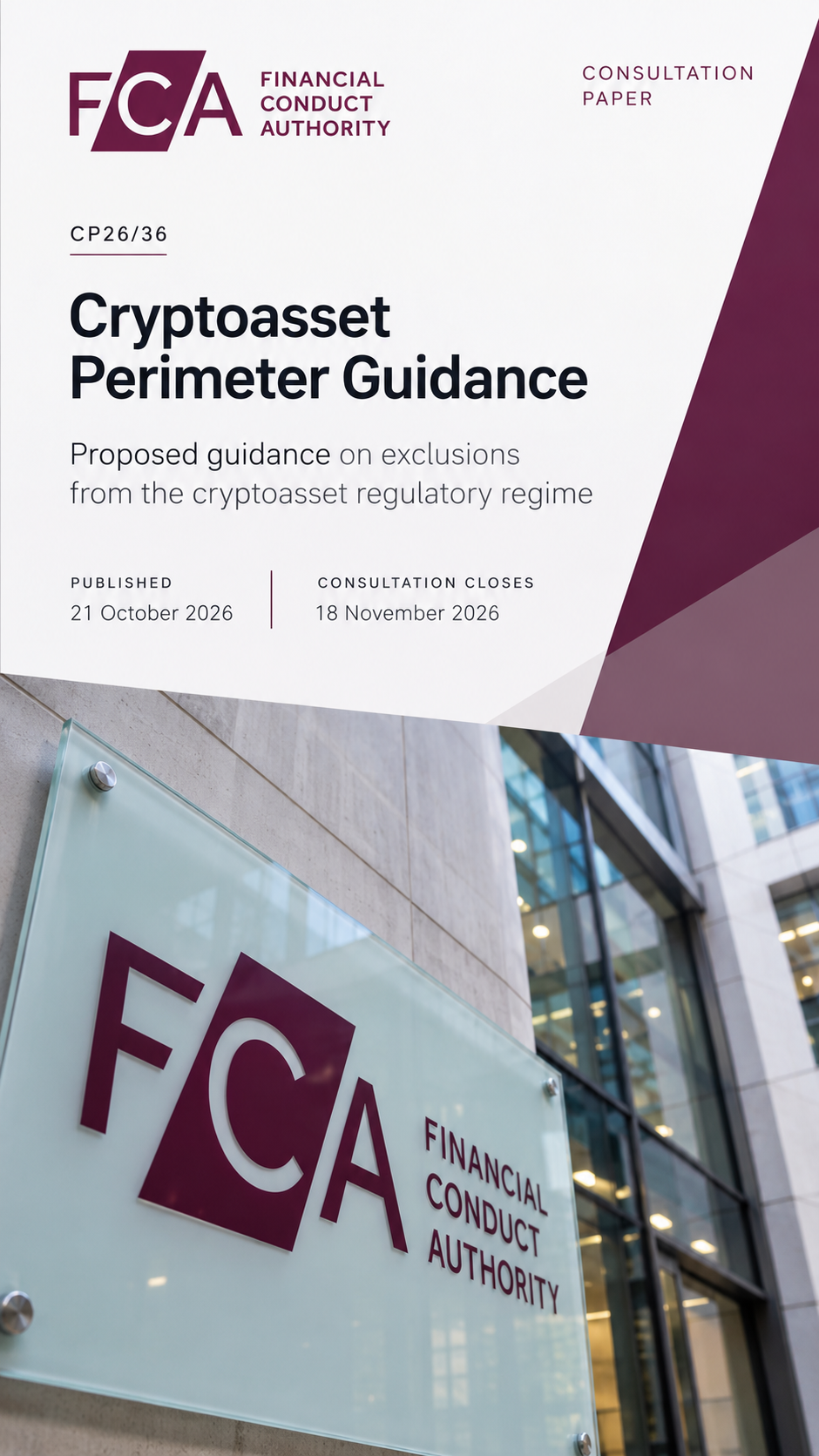
On Wednesday 21 October, the UK’s Financial Conduct Authority (FCA) published new consultations that could help answer that question.
And the distinction is an important one: providing financial technology is not necessarily the same as providing a financial service.
Technology or Financial Service?
Consider a non-custodial wallet connecting someone to a decentralised exchange.
The user controls their own assets, the transaction takes place through a smart contract, and settlement happens directly on the blockchain.
The wallet provider supplies the technology, but does that automatically make it a financial intermediary?
Not necessarily, the FCA is proposing guidance that recognises certain technical service providers may fall outside the UK’s crypto regulatory requirements.
However, this depends on what the business actually does, not simply whether it calls itself decentralised.
Regulation Should Follow the Activity
Traditional financial regulation was designed around institutions holding assets and executing transactions on behalf of customers. But DeFi works differently.
Decentralisation doesn’t eliminate risk. There is still the possibility of Smart contract failures, fraud and financial crime which still remain genuine concerns.
The challenge is finding the balance between protecting consumers and allowing innovation.
Importantly, these are proposals, not final rules or blanket exemptions. The consultations close on 18 November 2026, ahead of the UK’s new crypto regulatory regime expected in October 2027.
The Bigger Picture
As jurisdictions compete to attract digital asset businesses, regulatory clarity is becoming just as important as innovation itself.
The UK has an opportunity to recognise the difference between operating a financial service and simply providing the technology behind it.
The New Money Order is changing how finance works. The challenge for regulators is to understand where the technology ends and a regulated financial activity begins.