
When you open a crypto wallet and see Bitcoin, Ethereum or another digital asset sitting there, it feels obvious where your crypto is: It’s in your wallet. Except technically, it isn’t.
Your crypto remains recorded on the blockchain. Your wallet is the interface that allows you to see those assets and, importantly, use the cryptographic keys that control them.
Think of the blockchain as a public ledger recording which addresses control which assets. Your wallet gives you the ability to control your address.
BiPS DEX is an example of a self custody wallet. BiPS DEX doesn’t hold or control a user’s assets. The private keys remain under the your control, and transactions are initiated and authorised by the user directly on the blockchain.
That’s fundamentally different from leaving crypto with a custodial platform, where the provider may hold the private keys on your behalf.
With self-custody, there is no intermediary holding your assets for you. Its freedrom. But that freedom also comes with responsibility.
If you lose access to your private keys or recovery credentials, a self-custody provider like BiPS DEX cannot simply reset your password or recover the wallet for you.
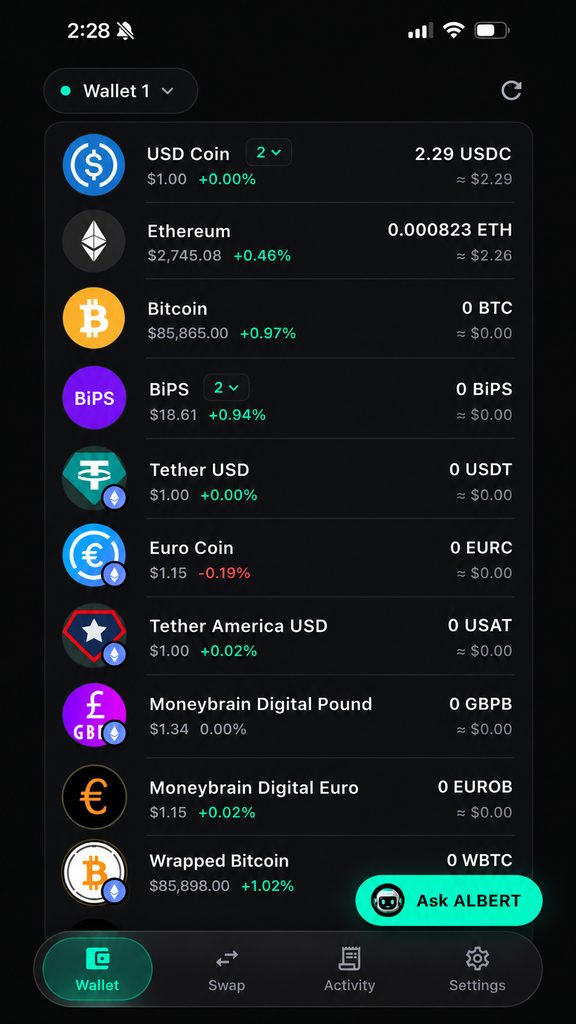
It also explains something that can initially seem strange. Deleting a self-custody wallet app doesn’t delete the assets recorded on the blockchain. With the correct recovery credentials, you can regain control of the same blockchain addresses.
So perhaps we should stop thinking about a crypto wallet as somewhere our digital assets are stored. The asset is live on the blockchain. The wallet is how you prove they’re yours, and how you control them.