
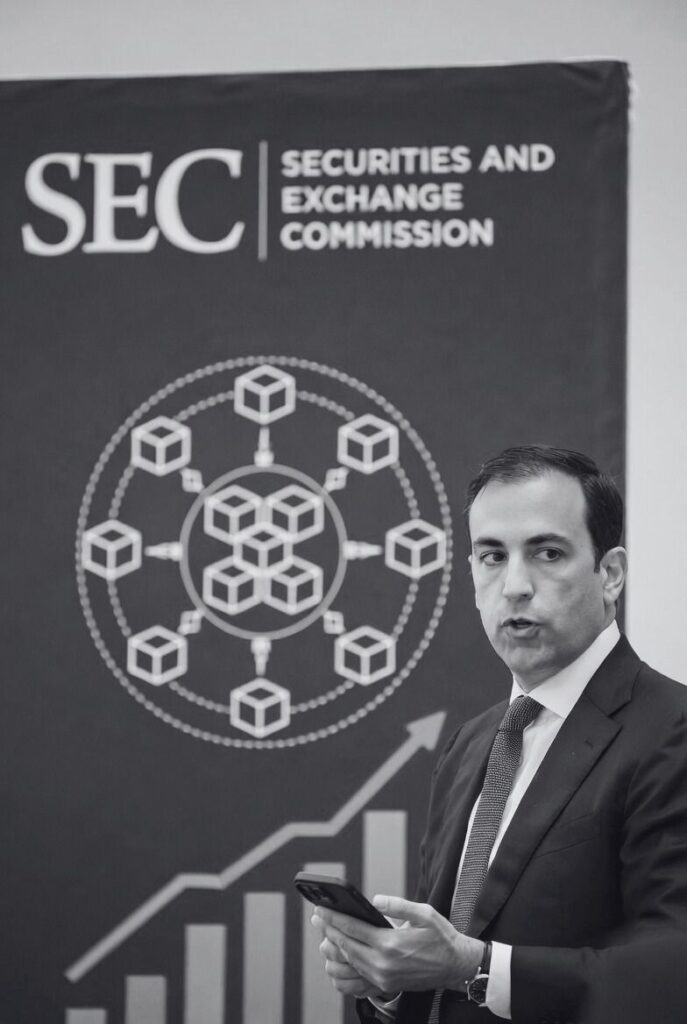
As part of the Trump Administration’s bold moves to onshore the crypto market, the chair of the SEC, the body that once witch-hunted crypto with chokehold 2.0 tactics, has now, under new leadership, done a complete 360. Paul Atkins, the freshly installed SEC chair, announced that starting in January 2026, there will be innovation exemptions to help crypto firms scale by bypassing some of those once corrosive regulations.
So, What Does It Look Like?
Picture a regulatory sandbox where blockchain innovators can actually breathe without the immediate threat of enforcement actions crushing their momentum. Atkins laid this out in a recent CNBC interview, confirming the SEC is on track to roll out this pilot programme by early next year, despite earlier federal shutdown hiccups. At its core, the exemption offers temporary safe harbour: eligible crypto firms can test and launch on-chain products without jumping through the full hoops of securities registration, exhaustive disclosures, and compliance nightmares that have driven so many outfits offshore.
We’re talking real-world applications here, not vague promises. Firms could deploy tokenised assets, like fractional ownership slices that settle instantly and trade round the clock; blockchain-based settlement tools to turbocharge payments; or novel market structures for banks and broker-dealers dipping toes into DeFi waters. No more months-long approval waits or risking lawsuits just for iterating on ideas, the exemption creates a defined perimeter under SEC oversight, complete with guardrails like periodic reporting to shield investors from wipeouts.
Eligibility tilts towards smaller or truly innovative players in the crypto space, rather than the behemoth exchanges, though larger entities experimenting with tokenised securities might snag spots too. It’s pitched as short-term relief, linked to the pilot phase, with timelines flexing based on real-world feedback.
Some Not Unsubstantial Exemptions, I’m Sure You’ll Agree
These aren’t trifling carve-outs, they slash the barriers that have strangled U.S. crypto expansion for years, injecting the regulatory certainty that’s been as elusive as a stablecoin peg during a bank run. With America’s ambitions to crown itself the crypto capital of the world, this draws a firm line in the sand against the persecution vibes of the past, potentially ushering in a golden age for digital assets stateside.
Faster token launches, revived IPO pipelines for blockchain plays, and a genuine onshore pivot from the Trump team could supercharge scaling. Atkins even nodded to broader “Project Crypto” vibes, hinting at exemptions for tokenisation experiments and clarity on non-security tokens like network utilities or meme coins, which won’t trip the Howey test wire. It’s rocket fuel for DeFi, RWAs, and everything in between, positioning the U.S. to claw back ground lost to friendlier jurisdictions.
That said, not everyone’s toasting with champagne flutes of Bitcoin. You can imagine traditional stock exchanges grumbling that this might let crypto upstarts sidestep broker-dealer mandates for tokenised equities, tilting the field and leaving legacy investors in the dust. Still, on balance, this feels like the tailwind crypto firms have been hoping for, a definitive U-turn from the old guard.