
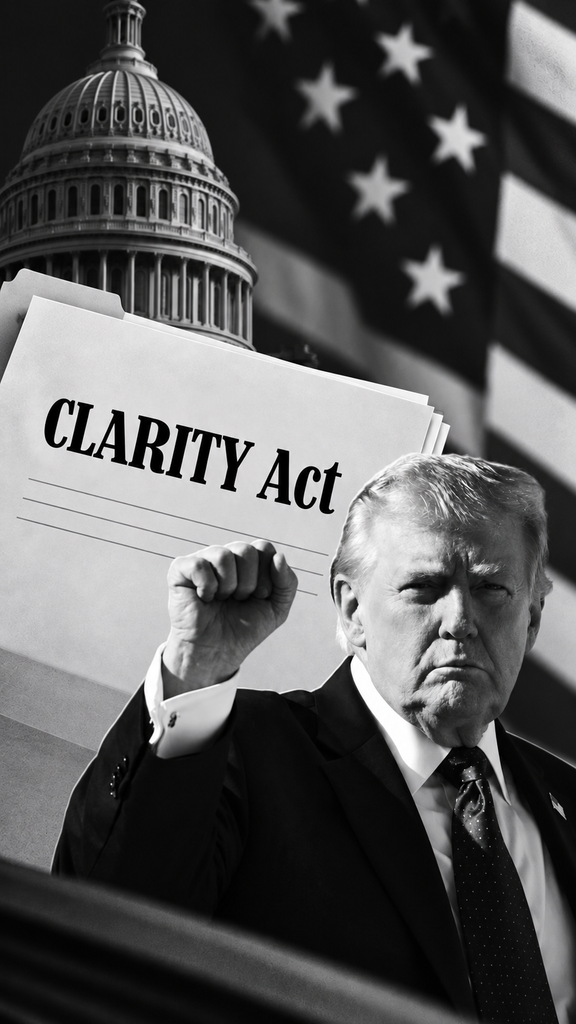
One of crypto’s biggest regulatory questions has always been surprisingly simple: who actually regulates what?That is what the US CLARITY Act was designed to address.
The legislation aimed to create a clearer market structure for digital assets, including defining when a crypto asset falls under securities law and when it should be treated as a digital commodity. It would also establish clearer roles for the SEC and CFTC and introduce registration requirements for digital asset exchanges, brokers and dealers.
For an industry that has spent years operating around regulatory uncertainty, that distinction matters.
This week, however, the Senate failed to advance the legislation. The procedural vote finished 49–50, short of the 60 votes required. The debate wasn’t only about crypto regulation itself: lawmakers had also been negotiating issues including consumer safeguards, stablecoins, banking competition and restrictions around public officials’ crypto interests.
So, for now, the regulatory question remains. But the technology hasn’t stopped.
Stablecoins continue to move into mainstream payment infrastructure. Traditional assets are being tokenised. Self custody wallets like BiPSDEX are becoming more capable, and blockchain settlement continues to develop.
Regulation moves through negotiations, votes and political cycles. Blockchain moves 24/7.
The challenge may no longer be deciding whether digital assets become part of the financial system, but making sure the rules can keep up with a system that is already changing.